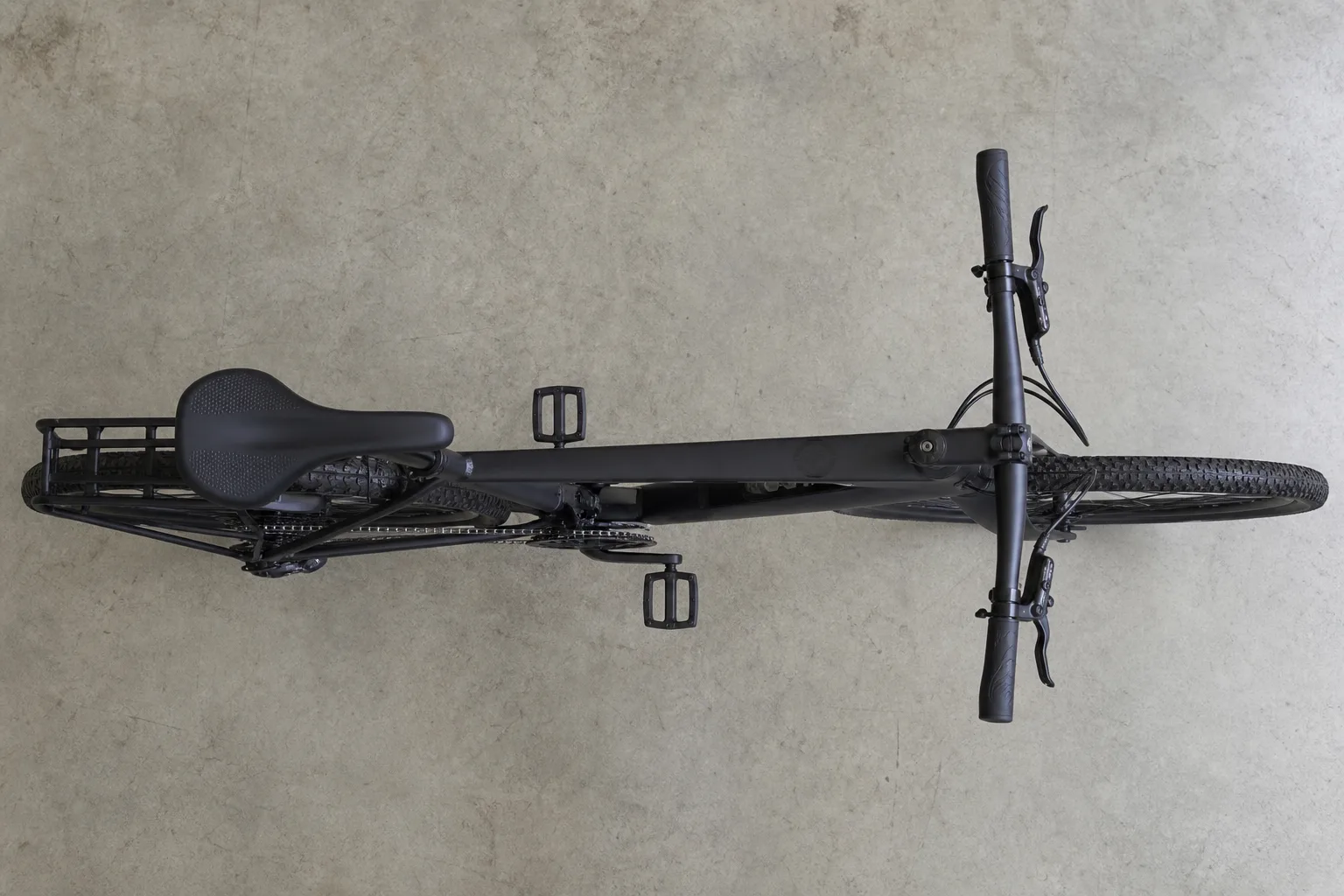
Buying a hybrid this weekend? Five checks to make before you ride it home
Saddle position, standover clearance, the limits of a ten-minute test ride, the bolts a boxed assembly leaves loose, and what a rack and lights add to the price.
The moment a bike is paid for, the relationship changes. Before the sale, a shop has every reason to adjust, swap and re-torque; afterward, the same work becomes a scheduled appointment, and the small annoyances that would have taken four minutes on the floor turn into a Saturday you spend on someone else's calendar. That asymmetry is the whole argument for slowing down at handover. A careful buyer treats the last twenty minutes in the shop as the most useful twenty minutes of the purchase, and asks for the adjustments then, out loud, while the wrenches are still within reach.
1. Saddle height and setback, settled before the bike is boxed up as finished
Height is the easy half: with the pedal at the bottom of its stroke and the heel resting on it, the leg should be nearly straight, which leaves a slight bend once the ball of the foot moves onto the pedal. Setback is the half people skip, and it changes how much weight lands on the hands. Sliding the saddle forward or back on its rails shifts the rider's mass relative to the cranks, and a saddle too far forward puts a surprising load on the wrists over a half-hour commute. Ask for both numbers to be marked, so a hotel rack or a car trunk cannot erase the work.
2. Standover clearance, which is about stopping rather than pedaling
Straddle the top tube in the shoes you actually ride in and see what clearance remains. An inch or two on a paved-road hybrid is enough, because the number matters at the unplanned stop: a red light that changes early, a dog crossing a bike path, a foot going down faster than intended. Frames with a sloping or step-through top tube give a great deal of that clearance back, which is why they suit errand riding, where the bike is mounted and dismounted many times in one trip. A frame that clears comfortably standing still is a frame that will not bruise anyone in traffic.
3. What ten minutes around the block genuinely tells you
A short test ride is a reliable instrument for a narrow set of questions. It shows whether the bike tracks straight with hands loose on the bar, whether the brakes bite where the fingers expect them to, whether shifting under mild load lands cleanly, and whether anything rubs, ticks or rattles. It will not tell you about saddle comfort, hand numbness, or the gear you wish you had on the one steep block near home, because those are all thirty-minute problems and beyond. Ride for the mechanical answers, then ask what the shop's fit adjustment and saddle exchange policy covers in the first month.
4. The bolts that a boxed assembly commonly leaves loose
Most bikes arrive at a shop partly assembled in a carton, and a small set of fasteners is finished last, under time pressure, by a mechanic who did nine others that morning. Stem faceplate bolts, stem-to-steerer clamp bolts, seatpost collars, brake and shifter lever clamps, rack and fender hardware, and pedal threads are the usual suspects, along with the headset preload that keeps the fork from developing a knock. The Consumer Product Safety Commission is responsible for the federal safety requirements that govern bicycles sold in the United States, and shops build to them; a torque-wrench check in front of you at pickup, plus a free thirty-day tune once cables and spokes settle, is what closes the loop.
5. Rack, fenders and lights, priced as part of the bike rather than after it
An all-purpose bike is not finished until it can carry a bag, shed road spray and be seen at dusk, and those three items are rarely in the sticker price. A rear rack with a pannier, full-coverage fenders sized to the actual tire width, a rechargeable headlight and tail light, a lock heavy enough to be worth carrying, and a bottle cage add a real sum, often a meaningful fraction of a mid-range hybrid's cost. Ask the shop to quote the whole package with installation included, because fender line adjustment and rack fitting take shop time. Bundled at purchase, the labor is usually folded in.
Write the saddle height on a piece of tape inside your wallet, keep the receipt with the tune-up window noted on it, and put the first free service on the calendar before you leave the parking lot. A bike set up carefully at handover is a bike that gets ridden.